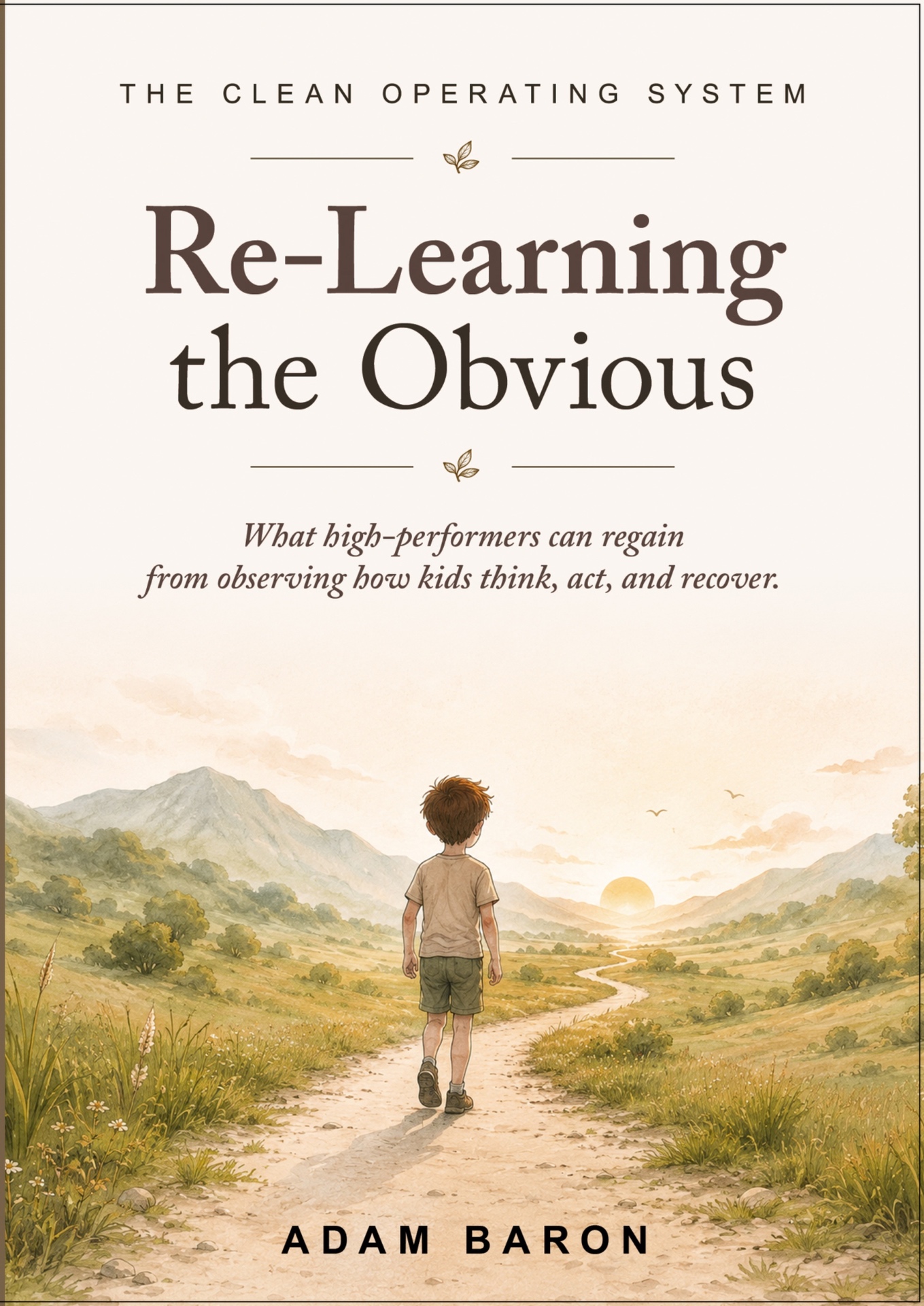
Relearning the Obvious
The Clean Operating System
Four systems. One cycle. Sustainable high performance.
We once knew how to live naturally.
Children move through the world with curiosity, energy, trust, and presence. They rest when they are tired, ask when they do not understand, recover quickly, and give their full attention to what is in front of them.
Growing up often means replacing these instincts with pressure, complexity, and constant self-correction.
Re-Learning the Obvious is an invitation to remember what was never truly lost — and rebuild a cleaner way of living, working, and relating.
The instincts adulthood quietens.
Curiosity before certainty
They explore before they judge.
Energy before endurance
They move, pause, rest, and begin again.
Trust before control
They connect without calculating every outcome.
Presence before productivity
They become absorbed in what matters now.
Recovery before pressure
They do not treat exhaustion as an achievement.
A concise field guide for high performers who want a cleaner way to operate.
Relearning the Obvious is a practical guide to reducing unnecessary complexity and building a more sustainable operating rhythm across work and life.
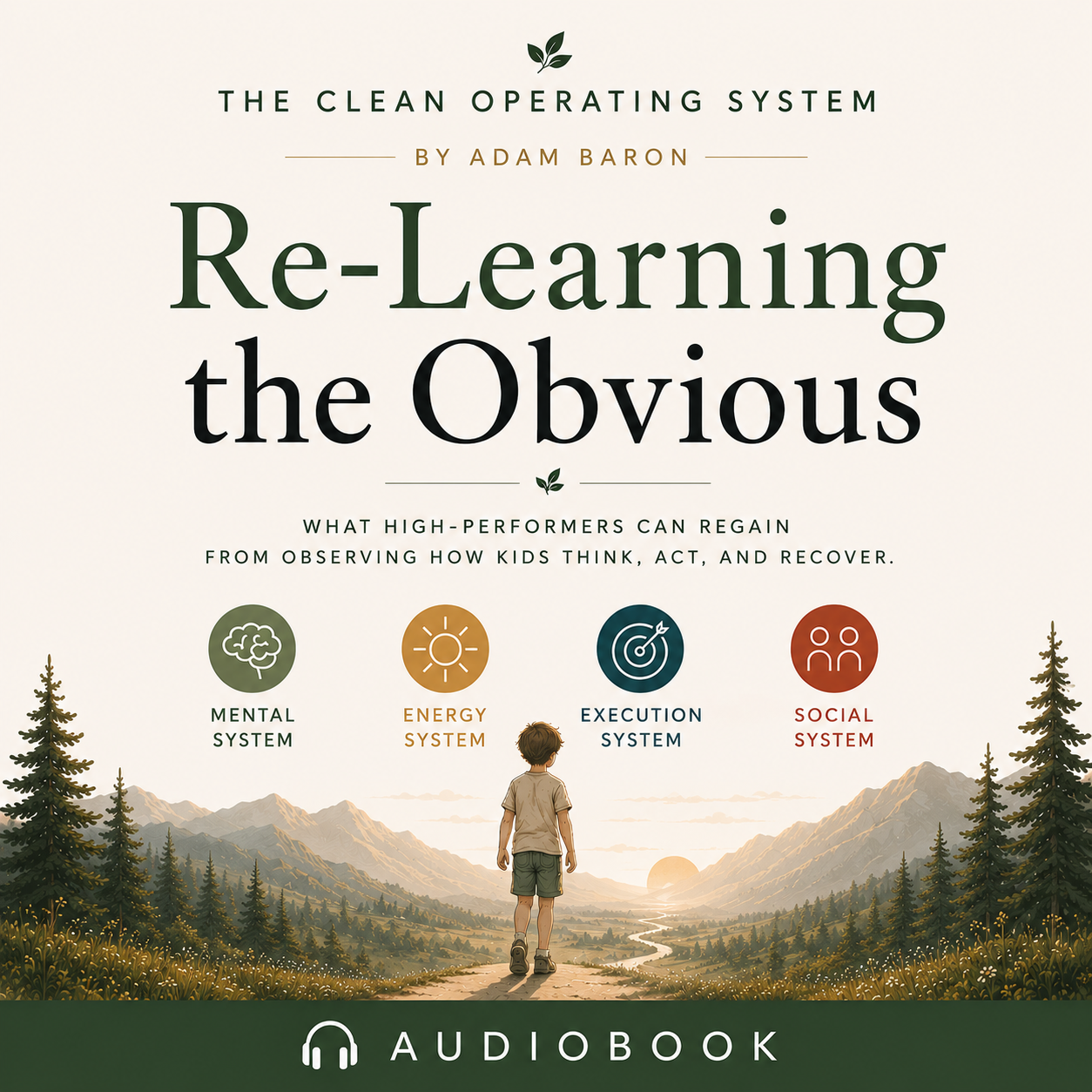
It brings together four systems — Mental, Energy, Execution, and Social — into one coherent framework, and shows how small, honest adjustments compound into a cleaner way of living and performing.
The book is short by design. It is meant to be read, marked up, and revisited — not consumed once and forgotten.
What the book returns to.
- Theme 01Removing noise before adding effort
- Theme 02Energy as a system, not a mood
- Theme 03Attention as a limited budget
- Theme 04Clarity before speed
- Theme 05Rhythm over intensity
- Theme 06Relationships as infrastructure
- Theme 07Sustainable performance
- Theme 08Simplifying the system
- Theme 09Relearning what we already know
For people carrying real responsibility.
- Leaders, operators, and founders under sustained pressure.
- Professionals who feel busy but not clear.
- Parents and partners trying to hold work and life honestly.
- Anyone quietly rebuilding after a period of noise.
- 01Curiosity as the Default: Why Asking “Why” Still Works
- 02Questioning the Status Quo Without Needing to Rebel
- 03Courage Before Experience: Acting Before Fear Moves In
- 04The Playground Principle: Learning Through Safe Risk
- 05Belief Precedes Capability: The Compounding Effect of “I Can”
- 06Play Before Perfection: Why Experimentation Beats Overthinking
- 07Performance Runs on Rhythm, Not Willpower
- 08Sleep Is Not Optional: Why Rest Is a Leadership Decision
- 09Fueling the Machine: Eating for Focus, Not Convenience
- 10Move to Think: Why Daily Motion Sharpens the Mind
- 11The Power of Shutdown: Ending the Day to Win the Next
- 12Maintenance Matters: Small Habits That Prevent Big Failures
- 13Focus as a Discipline: What Screen Limits Really Teach Us
- 14Full Presence as a Performance Multiplier: Why Attention Drives Quality
- 15Fast Recovery Beats Positivity: The Skill Kids Master Early
- 16Stories Over Slides: How Meaning Beats Information
- 17Character Scales Performance: Why Being Good Still Works
- 18Connection Before Strategy: Why Trust Accelerates Everything
"Sustainable performance does not come from pushing harder. It comes from operating with a cleaner system."
"Courage is action before fear becomes a full story."
"Boundaries are not restriction — they are the path back to agency."
"Sustainable performance is built through consistency, not intensity."
“This book is not a manifesto. It's a quieter argument — that most of what we need to perform well, we already know. The work is to relearn it, and to build a system honest enough to practise it.”
— Adam Baron